A calm, guided scan — then a clear answer
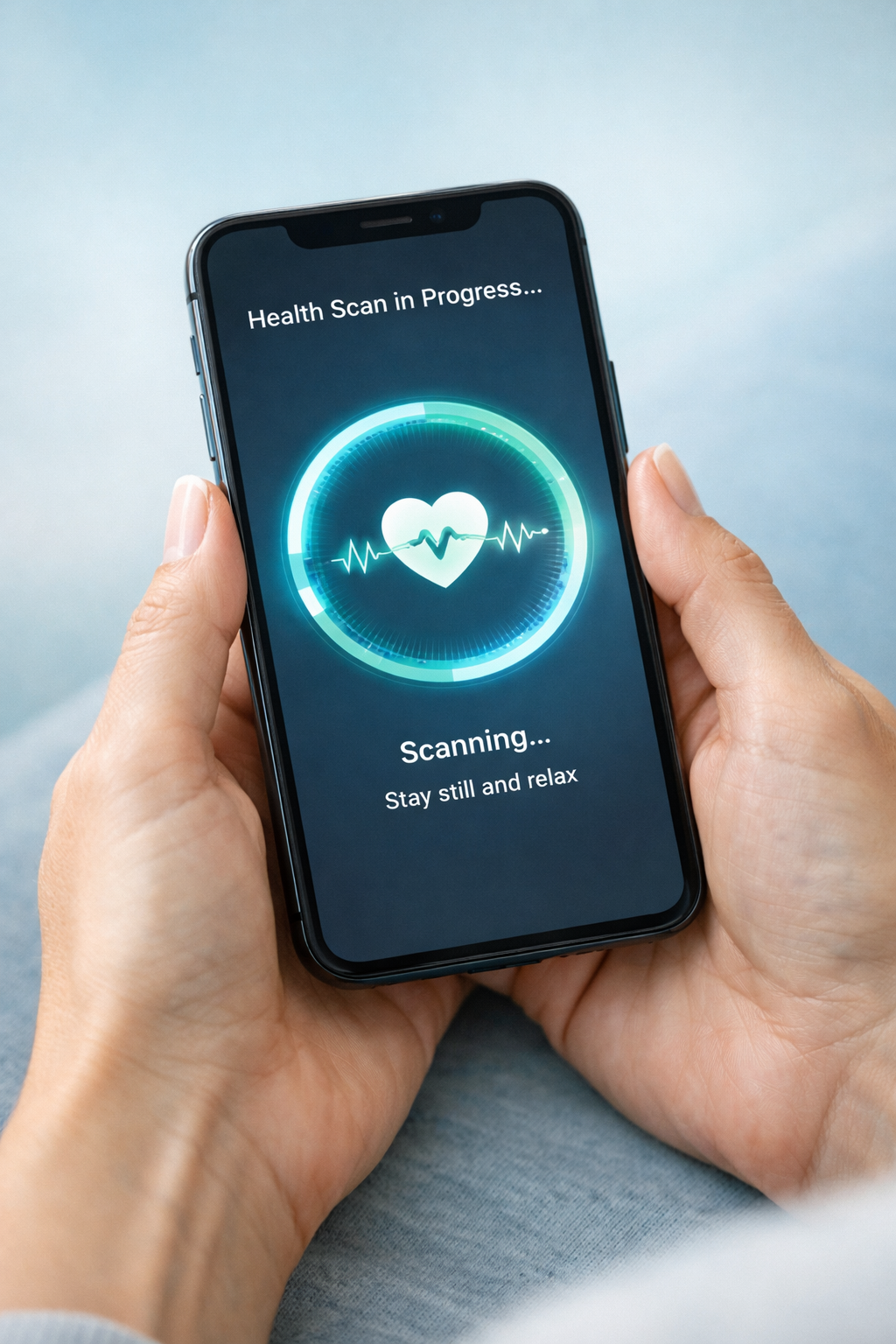
Lumina walks you through each step, explains what it sees, and never leaves you guessing about what to do next.
-
1
Take a guided photo
A frame and lighting guide help you capture a clear, consistent image of your tongue in about 30 seconds. Poor lighting? Lumina asks you to retry rather than guessing.
-
2
Add context
Tell Lumina how you feel, your age, sex, and any relevant history. Connect a wearable to include recent heart-rate, temperature, and sleep patterns.
-
3
Review your signals
Lumina presents likelihoods with a confidence range and explains, in plain language, which features informed each estimate. Nothing is presented as a diagnosis.
-
4
Follow clear guidance
Each result ends with one of four actions: keep monitoring, retest soon, book a lab test, or seek care now. Your timeline updates so trends stay visible.
Common questions
Is this a diagnosis?+
No. Lumina estimates likelihoods and points you toward appropriate care. Only a licensed clinician or laboratory can diagnose a condition.
Can it read my genetics?+
A tongue touch cannot read your genetic code. Genetic sequencing requires a lab sample. Lumina focuses on the signals that are genuinely feasible today.
Where is my data stored?+
By default your scans and timeline stay on your device. You choose what, if anything, to share with a clinician.